How to Choose a Living Room Rug Size: Size Table and Layout Diagrams
Short answer: the size of a living room rug is decided not by the rug but by your seating group. The safest rule: the rug should take in at least the front legs of the sofas. The most used living room rug sizes are 160×230, 200×290 and 240×340 cm. In a 15-18 m² room, 160×230 is usually too small; 200×290 is balanced, and 240×340 gathers the seating group fully in large rooms. Buying too small a rug is the most common decorating mistake, and it makes a room look smaller than it is.
Rug sizes and which room they suit
| Rug size | Approximate room area | Use |
|---|---|---|
| 120×180 cm | - | Mat / corner rug; too small for a living room |
| 160×230 cm | 12-15 m² | Small room, under the coffee table only |
| 200×290 cm | 16-20 m² | The most used living room size |
| 240×340 cm | 20-28 m² | Takes the seating group by the front legs |
| 300×400 cm | 28 m² and over | All the furniture sits on the rug |
↔ Scroll the table sideways to see all of it.
Leave 20-40 cm between the edges of the rug and the walls on every side. If the rug reaches the walls it looks like wall-to-wall carpet and the architecture of the room disappears.
Three layouts: which to choose?

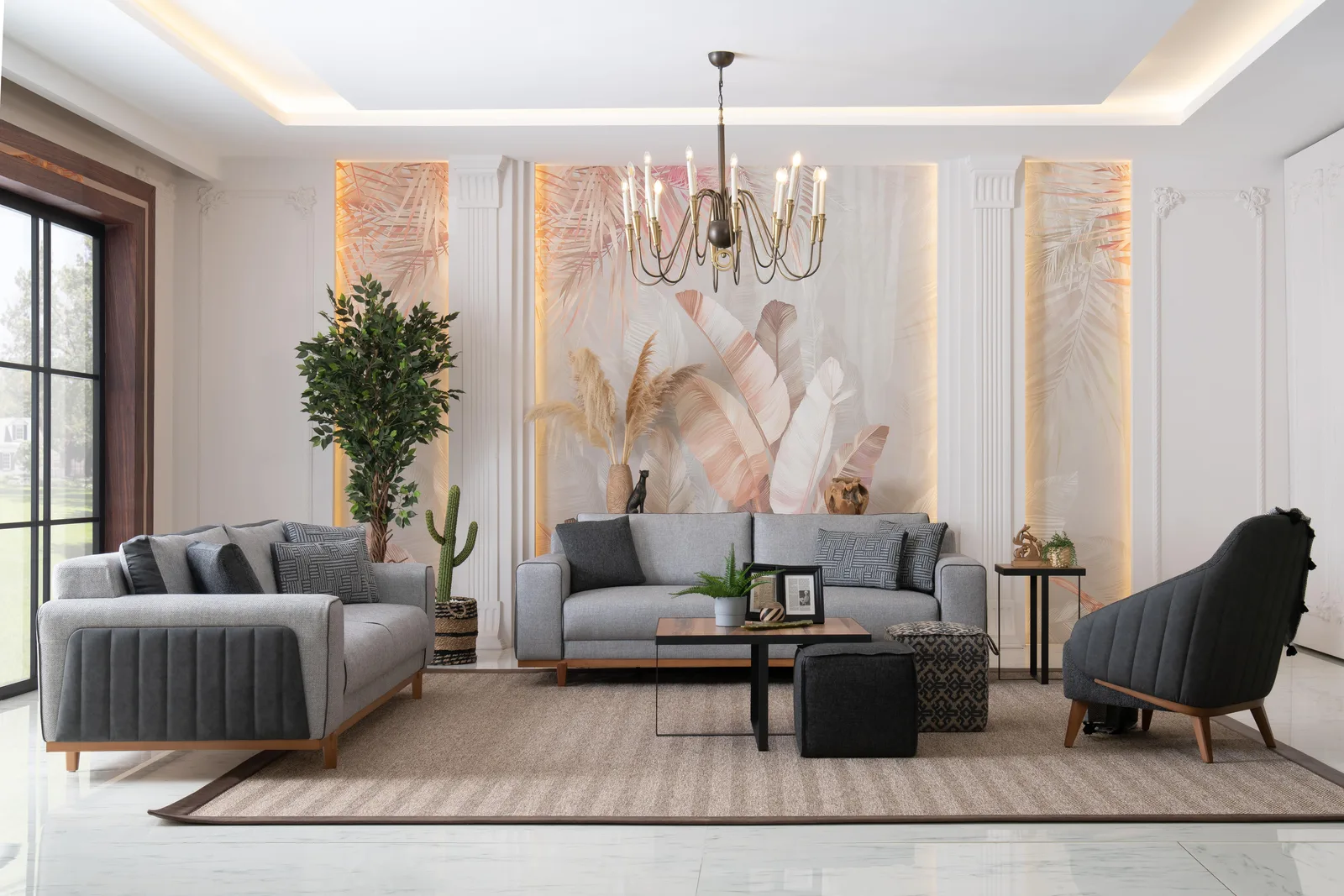
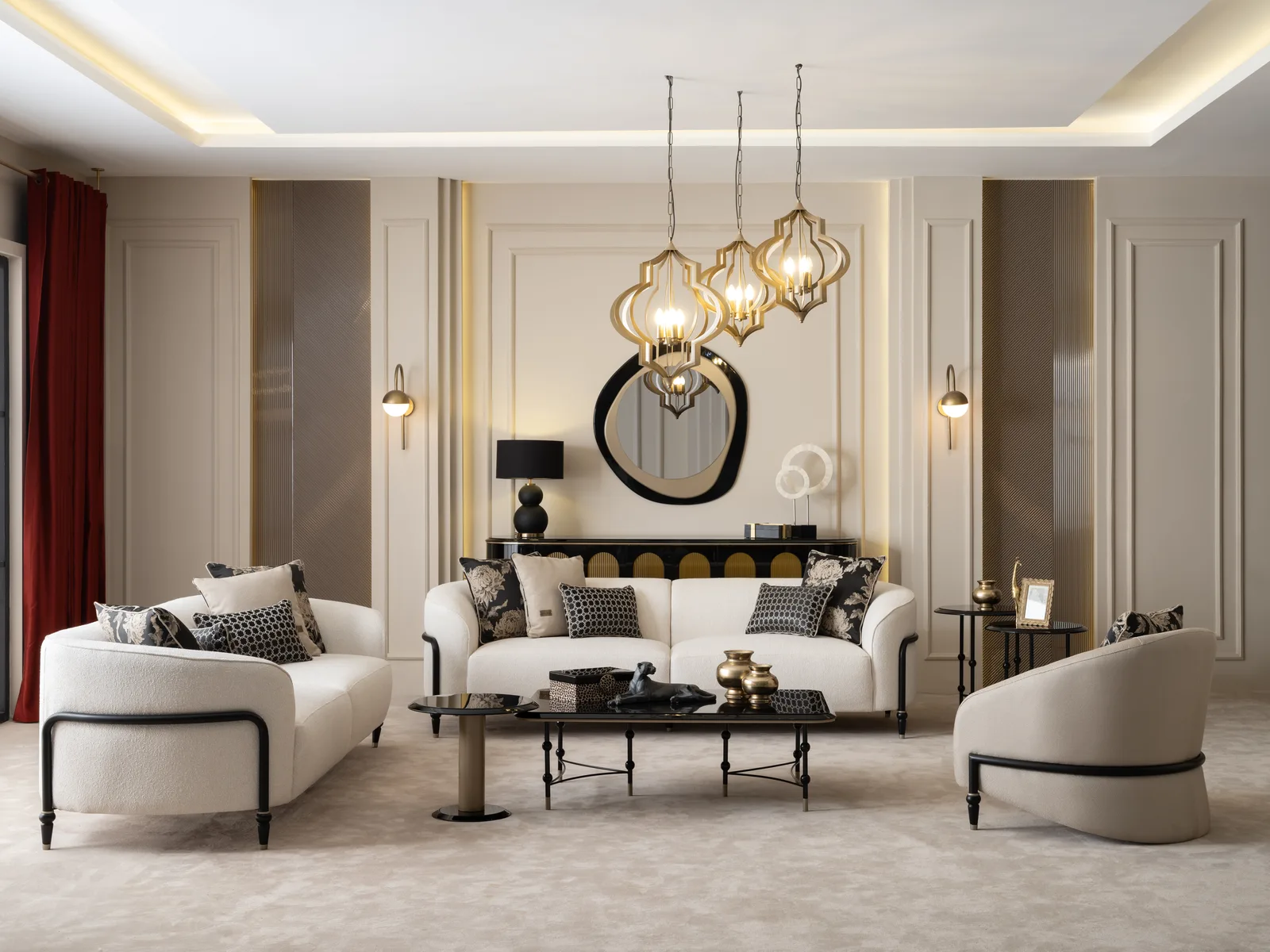
- All the furniture on the rug. The airiest and most expensive solution. In large rooms it defines the seating group as a single island. The rug needs to extend 20-30 cm beyond the sofas on every side.
- Only the front legs on the rug. The most balanced and most popular arrangement. It ties the seating group together without straining the budget. For most rooms this is the right answer.
- The rug only under the coffee table. Used in small rooms or on walkways. With the rug not touching the sofas, the space can look divided; it is the least preferred layout.
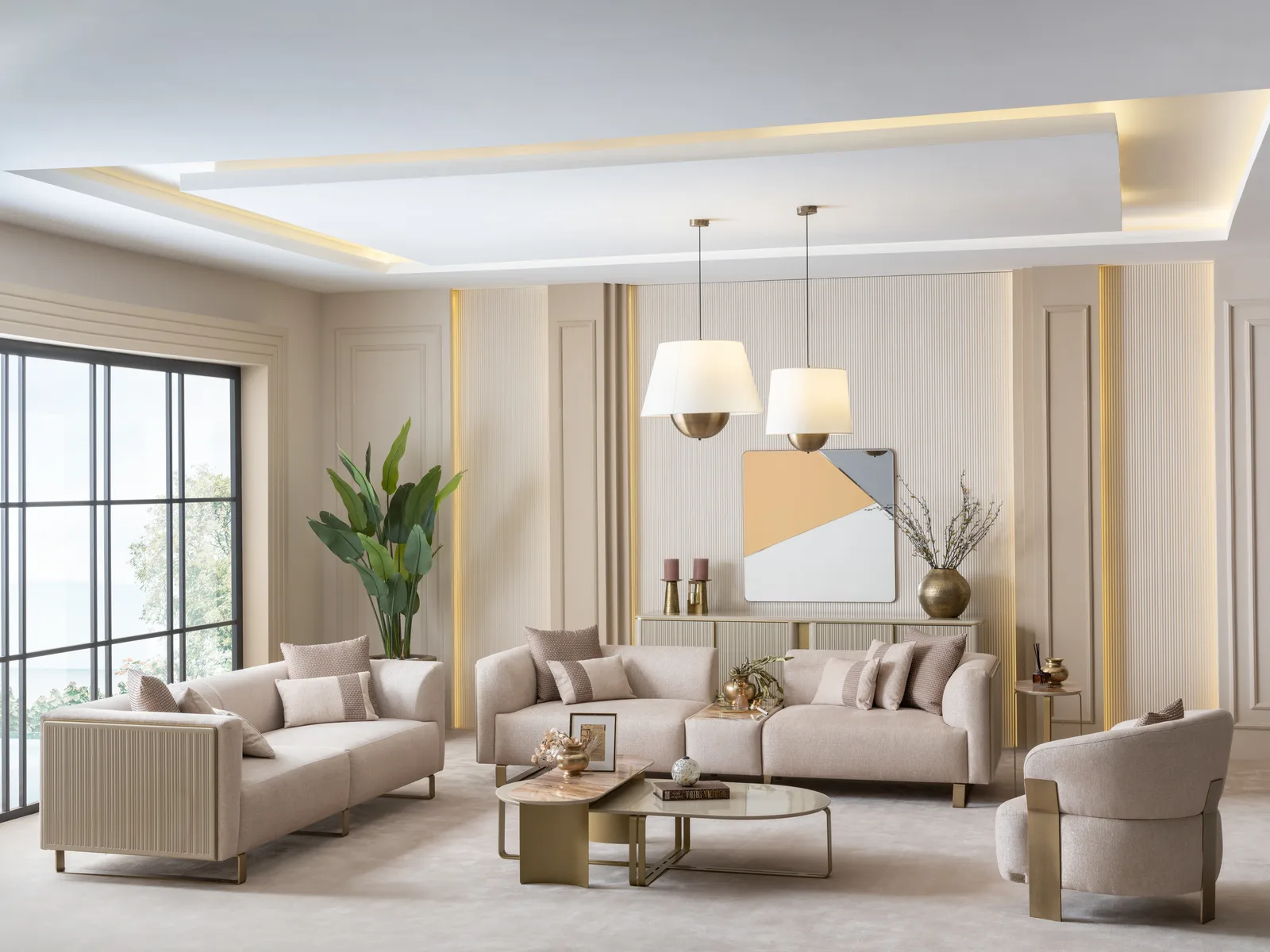
If you have a corner sofa, the rug needs to follow the inner corner of the L; count in your wing lengths. You can work out corner wing dimensions from our article on sofa set dimensions and living room layout.
Since the rug's position depends on the seating arrangement, it is worth settling the layout first; for diagrams see how to plan a living room layout.
Work out the rug size in four steps
- 1. Place your seating group (on paper or marked out on the floor with tape).
- 2. Draw the rectangle joining the front legs of the sofas.
- 3. Add 15-20 cm to that rectangle on every side — what you get is your minimum rug size.
- 4. Round up to the nearest standard size. With rugs, buying small produces regret far more often than buying large.
Rug size in a dining area

The rule for a rug under a dining table is clear: when a chair is pushed back, its back legs must still be on the rug. For that the rug must extend at least 60-75 cm beyond every edge of the table.
- For a 160×90 cm table: a rug of about 240×200 cm or larger
- For a 180×90 cm table: a rug of about 300×200 cm or larger
- For a round table: add 70 cm to the table diameter on every side and choose a round rug
To calculate table sizes by number of people see our article on how many people an extending dining table seats. The dimension tables for rectangular, round and oval tables in dining table dimensions will also help you set the rug size. In a dining area, choose rugs with a low pile and a tight weave — a chair leg catches on a high pile.
Texture, pile height and use
- Short pile (0-10 mm): chairs and vacuums pass easily and it is practical to clean. The best choice for dining areas and walkways.
- Medium pile (10-20 mm): a balance of comfort and looks in a living room.
- Long pile / shaggy (over 20 mm): soft and warm; but it holds dust, is hard to clean and swallows table legs. Choose it for seating corners that are used less.
- Non-slip backing: use a non-slip underlay on parquet and tiled floors, for safety and for the life of the rug.
Colour and pattern: does the rug decide, or the sofa?
The order matters. A sofa is used for 10 years and a rug changes more often — so choose the sofa first, then the rug.
- If your sofa is a plain colour: pattern is free on the rug; it gives the room character.
- If your sofa is patterned: choose a plain or very lightly textured rug.
- In a small room: a light, plain rug enlarges the space; a large pattern fills the room.
- Repeat your accent colour in the rug. Having the cinnamon tone of a cushion appear in the rug too ties the room together.
To build the colour hierarchy see the 60-30-10 rule, and for arranging a small room, how to furnish a small living room. If you want to look at the models that will sit on the rug, see the sofa set and corner sofa categories; for an example with clear dimensions, the 100×80 cm coffee table of the Arinna coffee table set is a good reference in the rug-size calculation.
Five common mistakes when choosing a rug
- Buying too small a rug. A small rug floating in the middle of the room makes it look both small and untidy.
- Pushing the rug to the wall. Leave 20-40 cm on every side.
- Measuring from the coffee table. The reference is the seating arrangement, not the table.
- A long-pile rug in a dining area. Chairs catch and stains cannot be cleaned.
- Not using a non-slip underlay. The rug slides, its edges curl and it wears out quickly.
Frequently asked questions
What size should a living room rug be?
In an average living room 200×290 cm is the most useful size. In rooms over 20 m², 240×340 cm; in rooms under 15 m², 160×230 cm is more suitable.
Should the rug go under the sofa?
At least the front legs should be on the rug. That is the most practical rule for visually tying a seating group together. In large rooms, putting all the furniture on the rug gives an airier result.
Can you use a large rug in a small room?
You can, and it usually looks better. As long as 20-30 cm is left between rug and walls, a large rug makes a small room look wider.
Where are round rugs used?
They work well under a round dining table, in a reading corner made up of a single armchair and side table, or in small square-plan seating areas. In long, narrow rooms a rectangular rug is more suitable.
Should the rug and curtains be the same colour?
They do not need to be, and it is not recommended. It is enough for both to be from the same colour family; using a light tone in one and a dark tone in the other adds depth to the room.