How to Choose Dining Room Chairs: A Buyer's Guide
Short answer: when choosing a dining chair, look first at how it matches your table height, then at the seat material (upholstered or solid wood) and finally at the balance between chairs with and without arms. The wrong chair for a given table leads to knocked knees, poor comfort and armrests that will not slide under the table top — which is why a chair is never a decision to make on its own, but always together with the table.
How does a chair match the table?
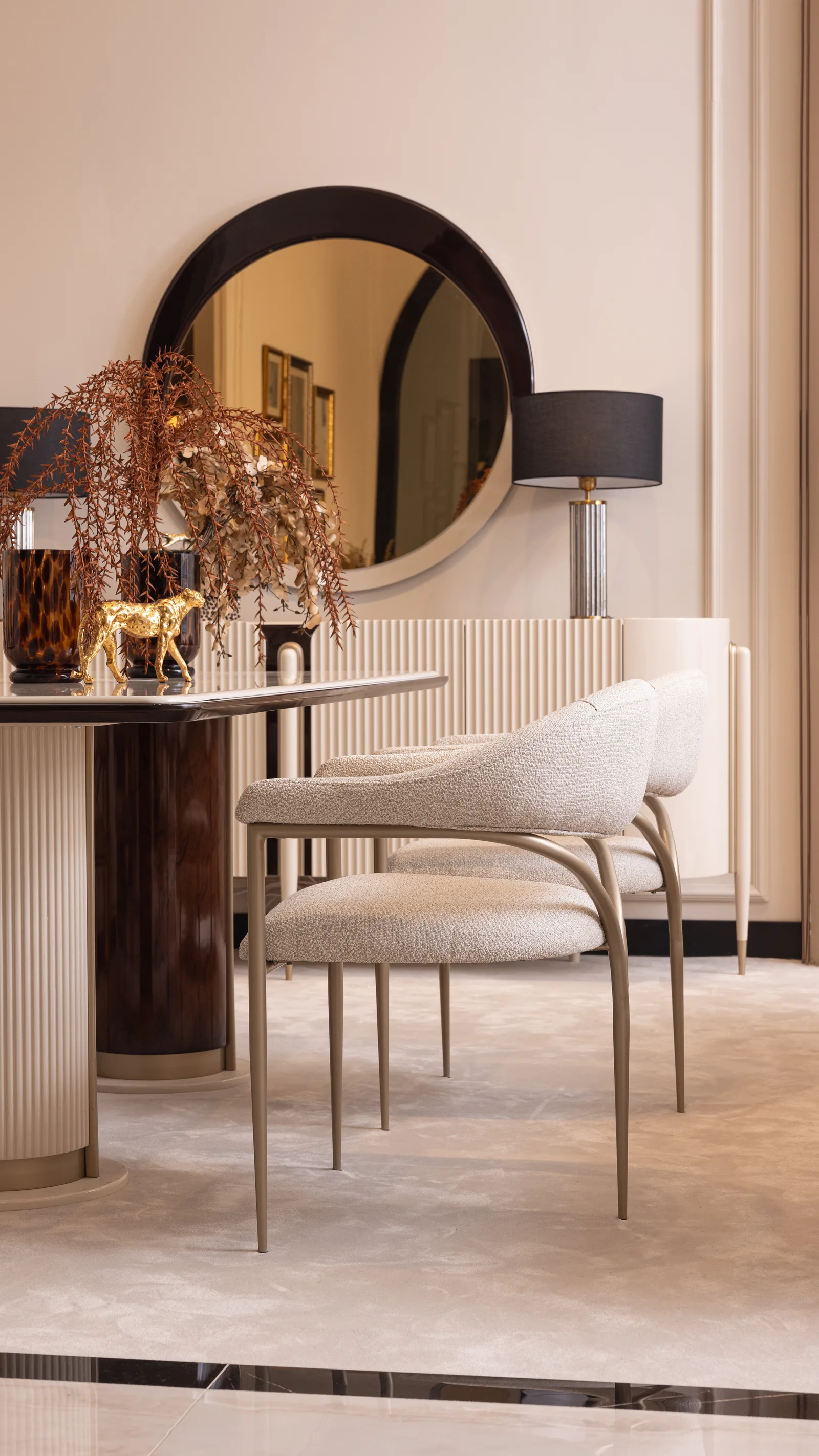
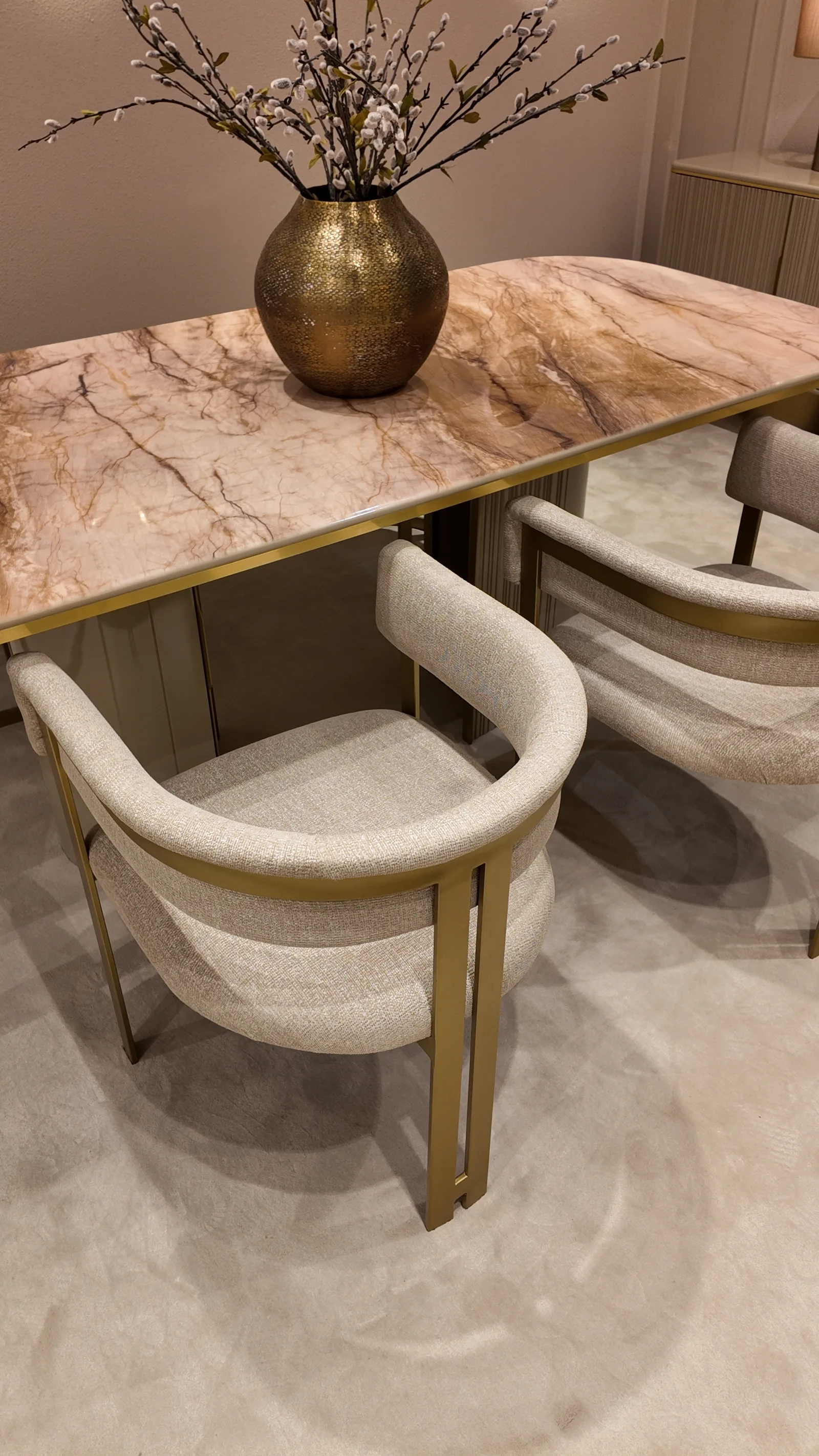
A chair's first job is to fit the table — its fabric and colour come second. For a healthy sitting position, a few dimensions have to work together: the table top sits at a set height off the floor, the seat surface is noticeably lower, and the gap between them is your knee clearance. If you are buying chairs with arms, the top of the armrest must not be higher than the clearance under the table top; otherwise the chair cannot be pushed in.
You will find the exact ranges for those dimensions, and how many cm a table needs per person, in the table in our dining table sizes: how many people article. Choosing the table first and the chairs to suit it is always less risky than working the other way round.
Upholstered seat or solid wood seat?

Dining chair seats are generally solved one of two ways: a soft seat covered in fabric or a leather-look material, or a hard seat made entirely of wood. Both are valid — which works better in a given home depends on how it is used.
| Feature | Fabric / leather-look upholstery | Wooden seat |
|---|---|---|
| Seating comfort | More comfortable over long meals | Fine for short sittings, firm |
| Cleaning | Wiped clean on stain-resistant covers | Wiped with a damp cloth, leaves no mark |
| Homes with children / pets | An advantage with stain-resistant covers | No risk of tearing, the most practical option |
| Look | Soft, full, modern | Plain, visible craftsmanship, minimal |
↔ Scroll the table sideways to see all of it.
Leather-look covers are more economical than real leather and simpler to look after; because they do not absorb liquid, a spilled spoonful of soup at the table is not a disaster. Models with a fully wooden seat, where frame and seat come from the same material, are the most hard-wearing option and the one that asks for the least care.
With arms or without?
On a table for six, you do not have to buy all six with arms — and often it is not practical: chairs with arms take up more room and may not push fully under the table. The common solution is to place one chair with arms at each head of the table and chairs without arms along the sides. That sets up a visual hierarchy and lets the side chairs sit closer to the table.
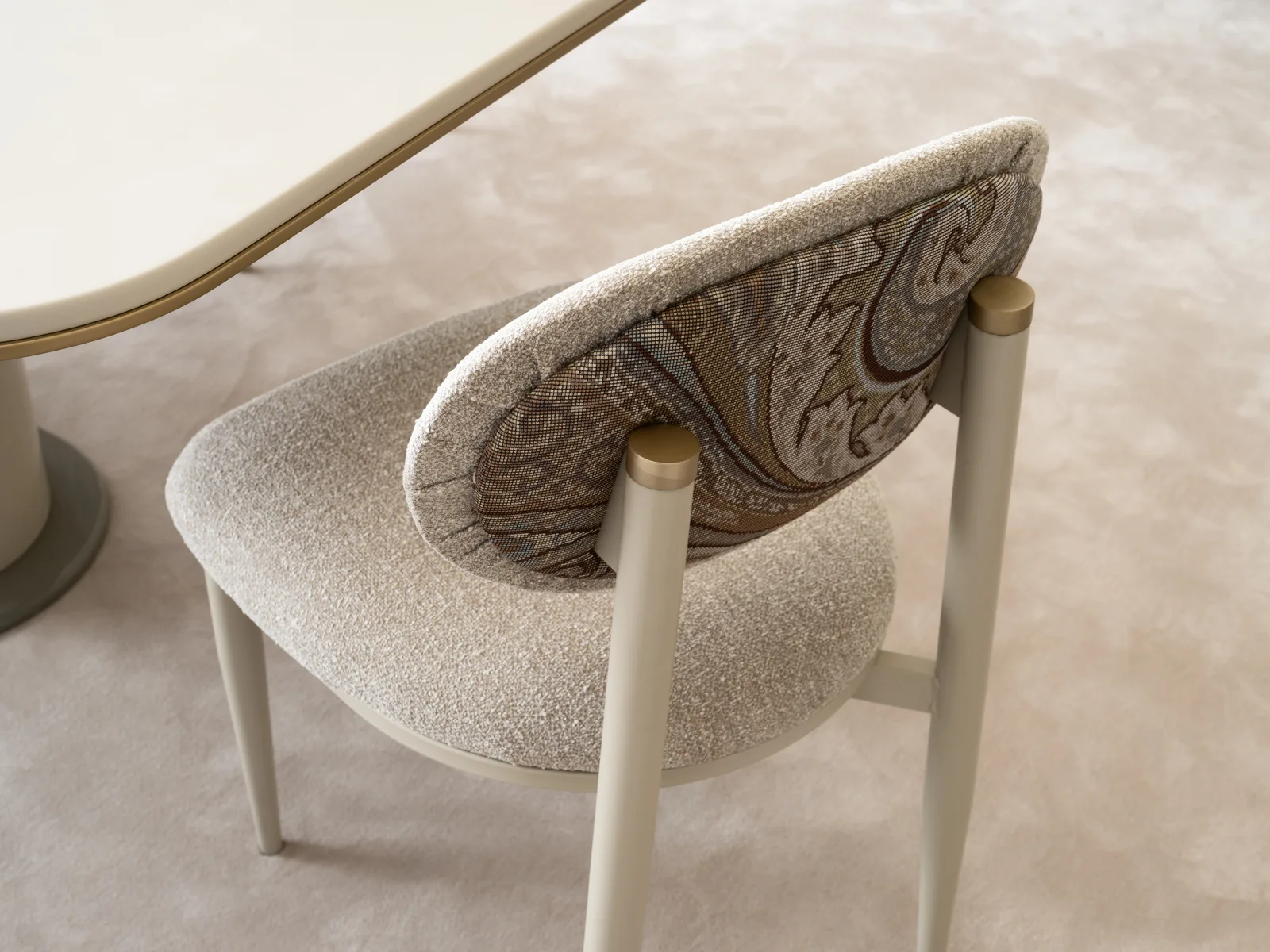
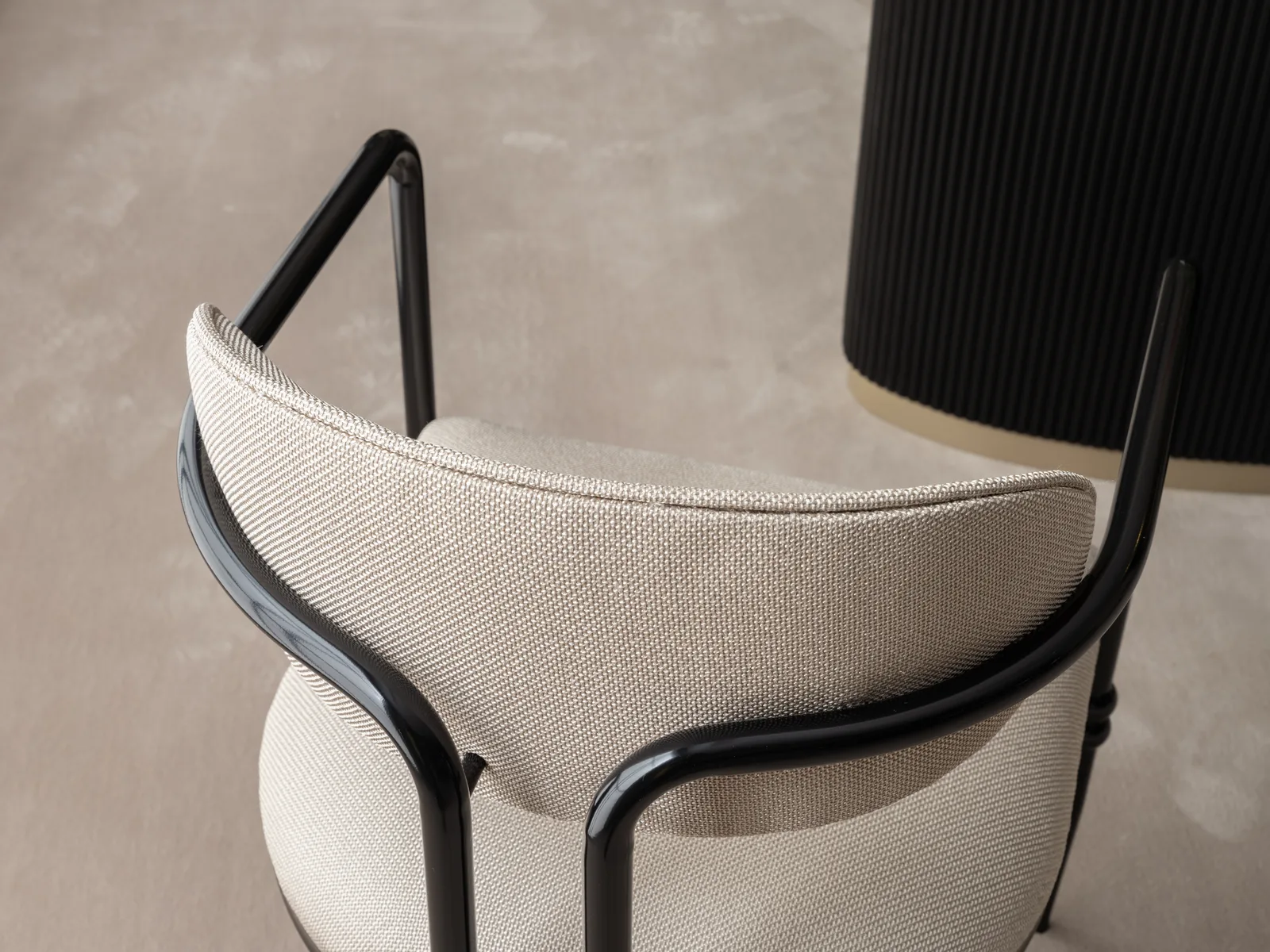
Armless models also look slimmer and save space in small kitchens and narrow dining areas; a wrap-around back shape can give even an armless chair a supported feel.
Leg material: slim metal or wood?
The material of the legs affects both durability and how the space reads:
- Slim metal legs: visually they take up no space, leaving an airy impression in small kitchens and tight dining corners. Lighter chairs generally fall into this group and are easy to move.
- Solid wood legs: they give a more solid stance and create unity when chosen in the same wood tone as the dining table. If the wood tone does not match the table (a light wood table with dark wood chairs, say), the contrast can also be used as a deliberate choice.
The question of wood material comes up when buying the table too; we compared the differences between MDF, chipboard and solid wood in our MDF, chipboard and solid wood differences article.
How many chairs should you buy?
The rule is simple: the number of chairs should equal the number of people the table seats comfortably, not more. Squeezing eight chairs around a table for six narrows the setting and eats into elbow room. Extending tables have two different figures: everyday capacity when closed, and guest capacity when open. For daily use, as many chairs as the closed size seats is enough; when guests come, carrying an extra chair in from another room (a study, the hallway) is a sufficient solution in most homes.
We explained in detail how many pieces a table and chair set contains and what comes as standard in our how many pieces are in a dining room set article.
Which cover is easier to care for?
The combination that causes the fewest problems in daily use is a stain-resistant cover with legs that can be wiped with a damp cloth. On fabric or leather-look seats, lifting a spill with a damp cloth before it dries prevents a permanent mark; a wooden frame should be wiped and not left wet. Lifting a chair to move it rather than dragging it extends the life of the leg joints. We have gathered the general care rules by material in our how to care for furniture article.
You can compare different seat and leg combinations in the dining chair category, and for a fully solid wood frame look at the difference between the Wood Chair and the mink-coloured, neutrally upholstered No-1 Chair.
Frequently Asked Questions
Should the chair colour match the table colour?
Not necessarily. The same tone creates unity; a contrasting tone (light table with dark chairs, or the reverse) makes the setting livelier. What matters is that the upholstery colour does not clash with the other fabrics in the room, such as curtains and rugs.
Do all the chairs have to be the same model?
No, mixed chair arrangements are used too; putting a different model — usually one with arms — at the heads of the table is a common choice. In a mixed arrangement, keeping one colour or material constant across all of them (the same wood tone, for instance) preserves the unity.
Which is more hard-wearing, a fabric chair or a leather-look one?
A leather-look cover does not absorb liquid, so it causes fewer stain problems in daily use. Fabric texture gives a warmer look but is more sensitive to stains; the choice depends largely on how the household actually uses the room.
Should the chairs be bought after the table?
Yes, that is the recommended order. Choosing chairs before the table height and the clearance under the top are settled raises the risk of finding out later that the armrests will not fit under the table.