Should You Buy Furniture Piece by Piece or as a Set?
Short answer: if the room is empty and you are furnishing it in one go, buying a set is the better choice — it guarantees the colours match and usually works out better overall. If you need to spread the cost over time, or only one piece is missing, buy piece by piece — but with two risks in mind: the tone of a piece bought months later may not match, and that model may have been discontinued. The question is not "which is better" but how quickly you want the room finished.
What is modular furniture, and how does it differ from a classic set?

A classic set is a fixed group designed and sold together: say "dining room set" and the table, chairs and display cabinet come as a whole. Modular furniture is made up of units from the same range that can also be sold individually and form a whole when placed side by side: starting the wardrobe with two doors and adding a corner module later, or building the TV wall from the lower block and buying the upper block afterwards. In short, a set says "finish it now", modular says "carry on later".
The advantages of buying as a set
- Colour and texture match. Pieces made in the same order come from the same paint batch, so no difference in tone arises.
- The dimensions are planned around each other. The bedside table is designed around the headboard, the coffee table around the sofa seat.
- It is finished in one go. One delivery, one installation; buying in pieces repeats the process.
- It is usually cheaper overall. A set price comes in below the sum of the pieces bought separately.
The disadvantages of buying as a set
- It needs a large budget at once. When the budget falls short people compromise on quality; postponing a piece is better.
- You pay for pieces you will not use. In a two-person home, six chairs or a display cabinet you will never open come with the set.
- It may not fit the room exactly. If your wall is 3 metres, the set's 3.4-metre unit will not go there; first work through how to measure for furniture.
The advantages of buying piece by piece
- You spread the cost over time. The bed and wardrobe today, the bedside table in six months.
- You buy what you need first. Not having a bed stops life; not having a coffee table does not.
- You design the room. In a narrow room one bedside table and a chest of drawers may make more sense than two bedside tables; with a set that choice is not yours.
- You do not compromise on quality. Buying the pieces of a good range in turn is more economical than a cheap set: how to find the best-value furniture.
The real risk of buying piece by piece: colours drift, models are discontinued
The least-discussed and most-experienced subject in the trade.
- The production batch changes and the tone shifts. Even with the same colour code, lacquer and veneer vary from batch to batch; in light creams, beiges and greys this is obvious.
- The model may be discontinued. Collections are renewed; a year later, when you say "one more bedside table from the same range", there is a real chance that piece is no longer made. This is something we sometimes have to tell our own customers.
- Dimensions do not line up, and fabric never matches. Across different ranges the coffee table height may not suit the sofa seat; and because fabrics change more often than wood, finding the same fabric a year later is the hardest of all.
Decision table: which is right for you?
| Your situation | The sensible choice | Why |
|---|---|---|
| New home, or renewing a whole room | Set | Coherence is achieved in one go |
| Only one piece has worn out | Piece | Replacing what is sound is a waste |
| The budget is not there today | Piece | Let the time stretch, not the quality |
| You are in rented accommodation | Piece | The next home's dimensions are unknown |
| The room is an unusual size | Modular | A fixed set will not fit |
↔ Scroll the table sideways to see all of it.
If you are buying piece by piece, what should come first?
One test only: can you live without that piece?
- Cannot wait: the mattress and base, somewhere to sit, a wardrobe or at least a rail, the dining table.
- Medium priority: TV unit, bedside table, wardrobe module, the missing chairs.
- Can wait: coffee table, nest of tables, pouffe, armchair, console, display cabinet, mirror.
If the piece you are postponing has a large surface, break the order and bring it forward: a difference in tone shows on a wardrobe or a unit, but not on a small bedside table. In a teen room this order is naturally piecemeal anyway: the bed and desk are bought first and the wardrobe added as the child grows; the dimensions are in teen room dimensions and choices.
5 ways to reduce the risk when buying in pieces
- Always stay within the same range. The range of the Rams 4-door wardrobe, for example, also has two-door, mirrored and corner modules; you add them as the room allows.
- Keep the colour and part codes in writing. "Cream lacquer" is not enough; you need the model name, colour code and fabric code.
- Ask the seller: "How long will this model stay in production?" If the answer is vague, bring the postponed piece forward.
- Set up a deliberate contrast. It removes tone drift as a problem: how to match furniture colours.
- Ask for a separate guarantee document for each piece; a piece bought on a different date has a guarantee that runs differently: furniture guarantees.
How does module logic work on a modular sofa?

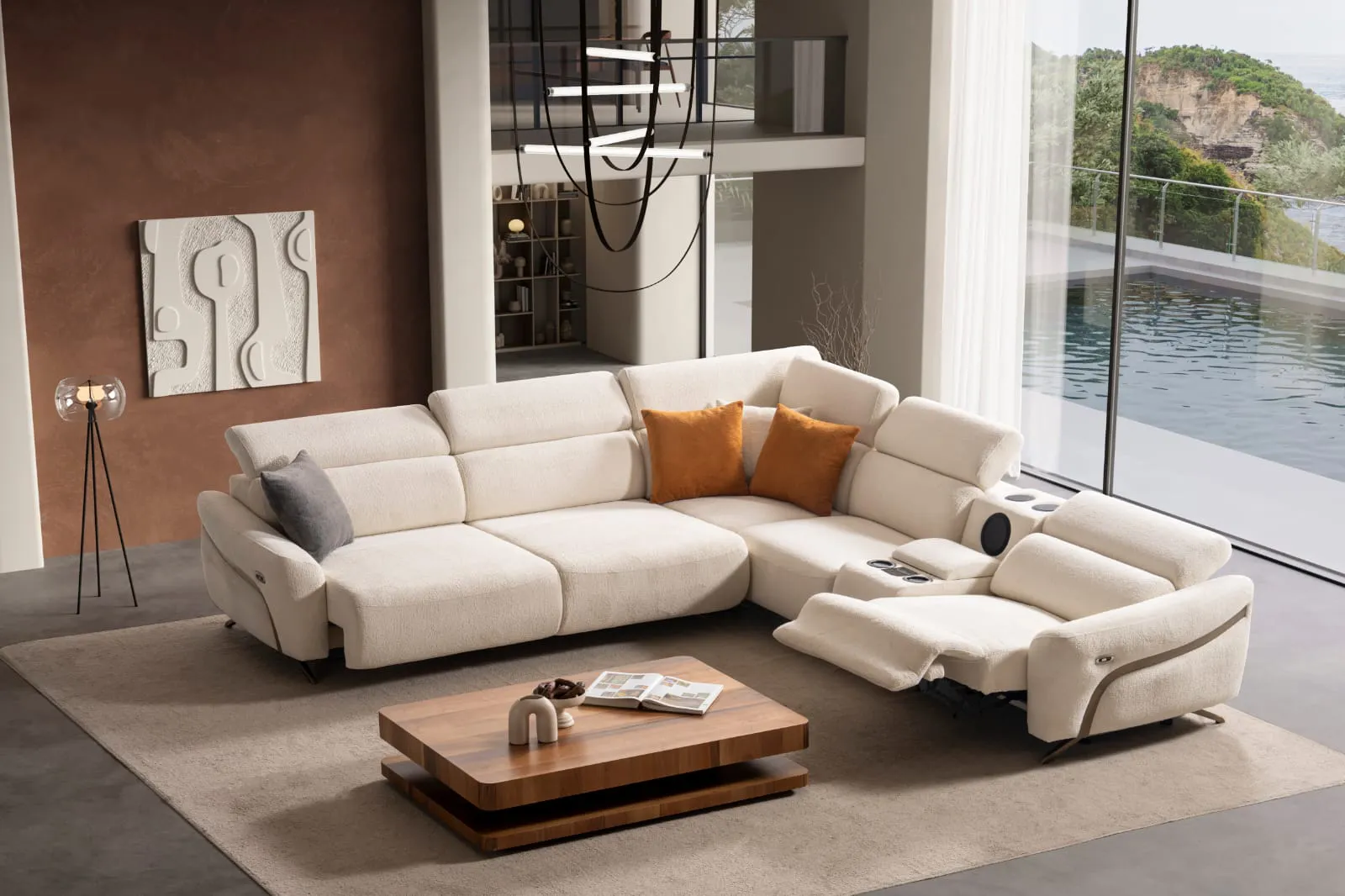
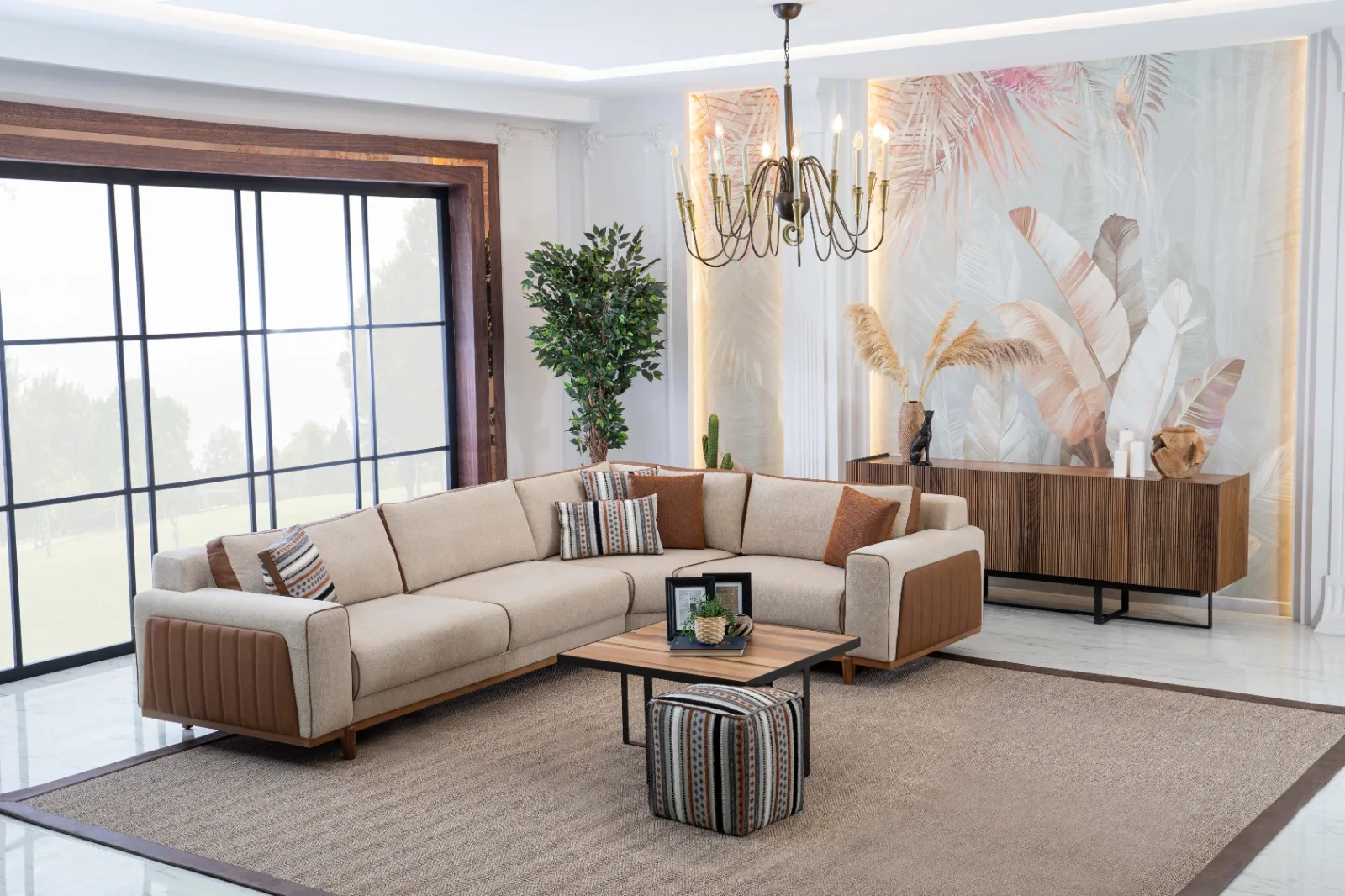
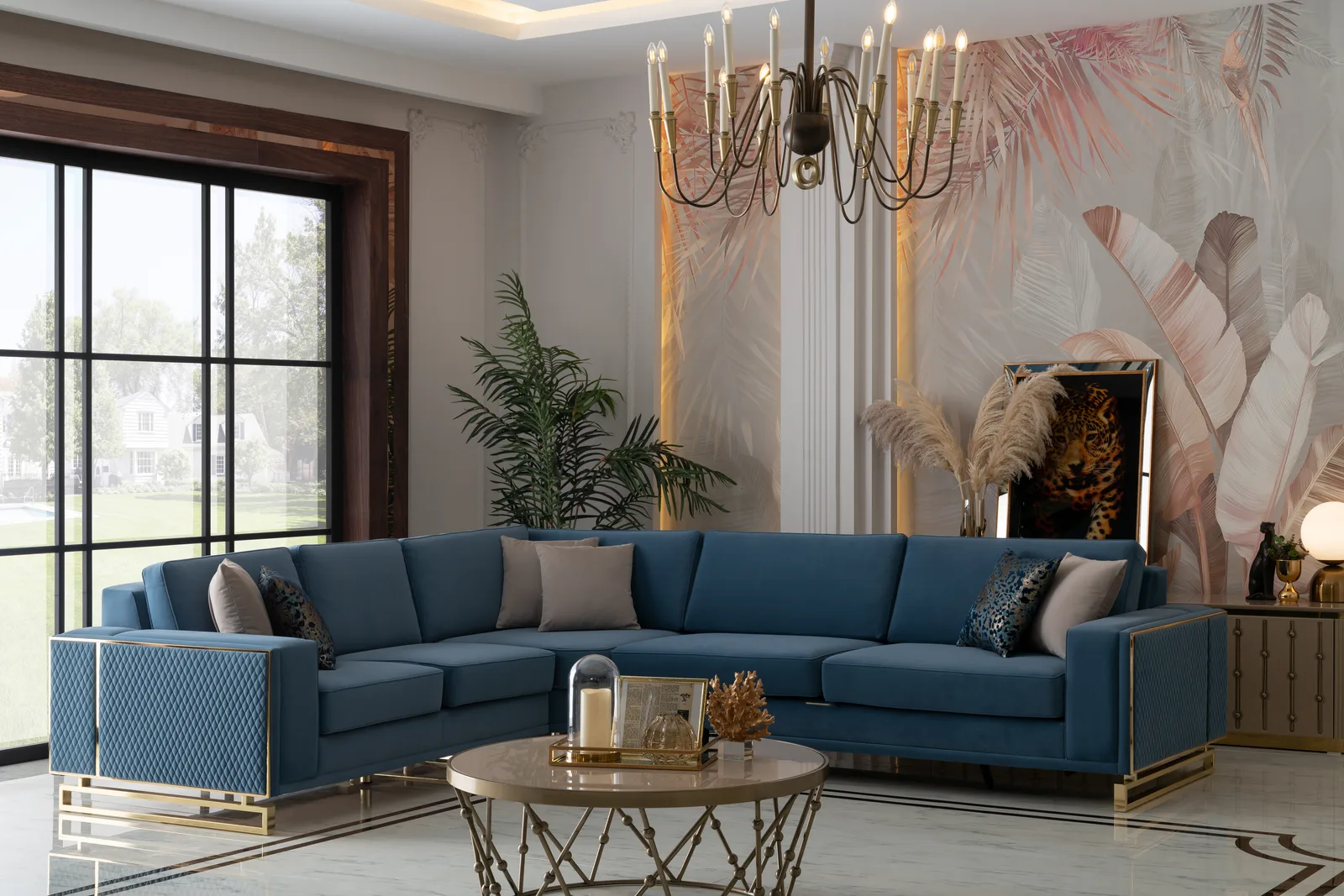
A modular sofa is the most mature form of buying in pieces. Armed end modules close the two ends of the run, armless middle modules in between increase the seating length, a corner module joins two runs at 90 degrees to form the L, and chaise longue modules and sofa-bed modules added at the end solve lounging and overnight guests. Because they are all made to the same depth and height, the silhouette holds even when the arrangement changes; the Arinna corner sofa is an example. If you have not settled on the form, see corner sofa or sofa set, and for models the sofa set category.
4 questions to ask yourself before deciding
- In how many months do I want the room finished? (Less than 3 → set)
- Does my budget cover the whole set? (No → pieces)
- Does the piece I am postponing have a large surface? (Yes → bring it forward)
- Does the range have continuing modules?
Where you are undecided, this rule works well: if the budget is tight, pieces; if time is tight, a set.
Frequently asked questions
Is buying a set cheaper than buying piece by piece?
Usually yes overall; the sum of the pieces bought separately exceeds the set price, and transport and installation are shared across one delivery.
Will I be able to find the same model again a year later?
We cannot guarantee it. Tell the seller at the outset which piece you plan to postpone and ask there and then whether the range will continue.
Which bedroom piece can I leave until later?
The chest of drawers, dressing table and second bedside table can wait; the bed frame and wardrobe cannot. In detail: how many pieces are in a bedroom set.