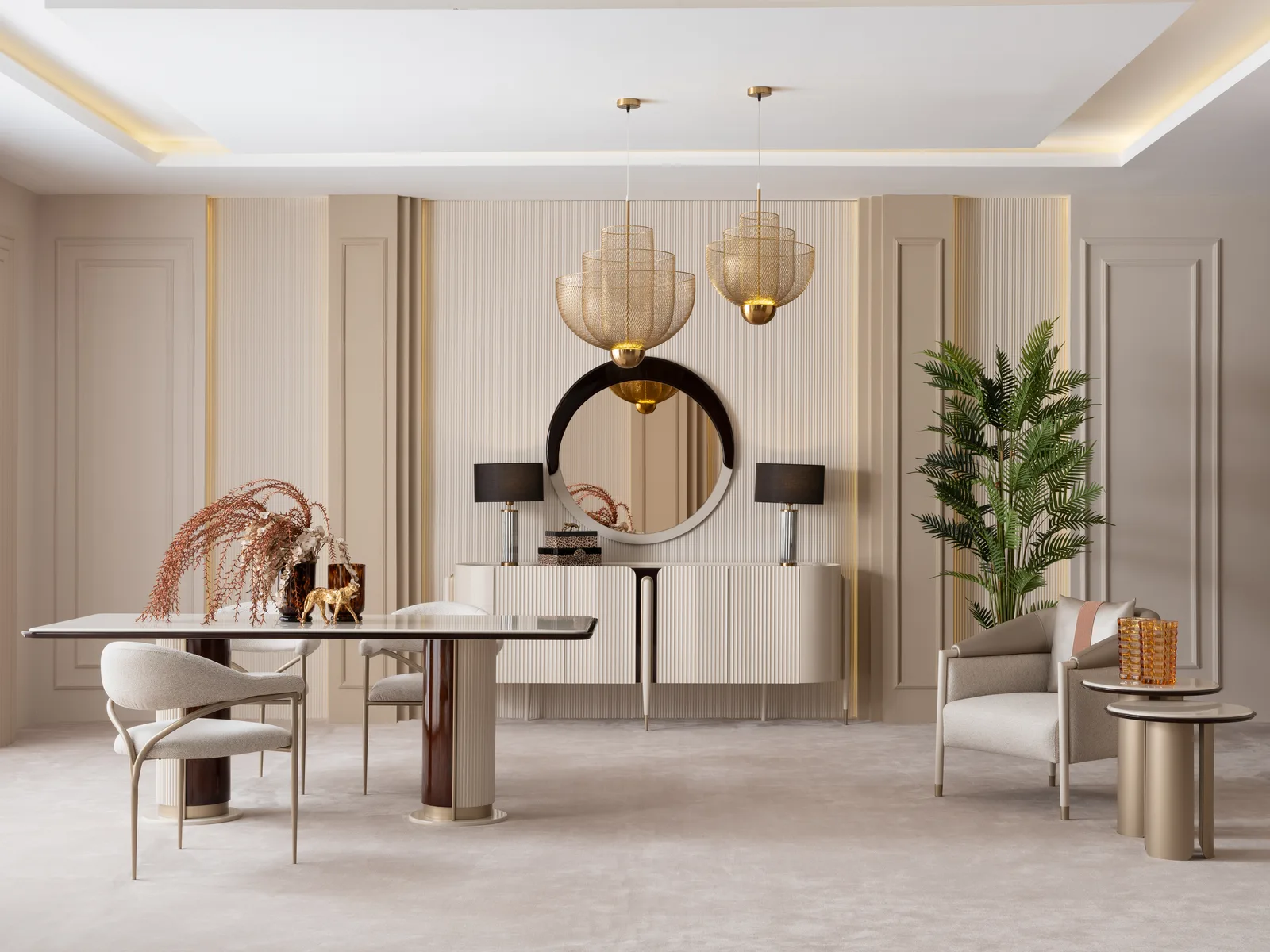
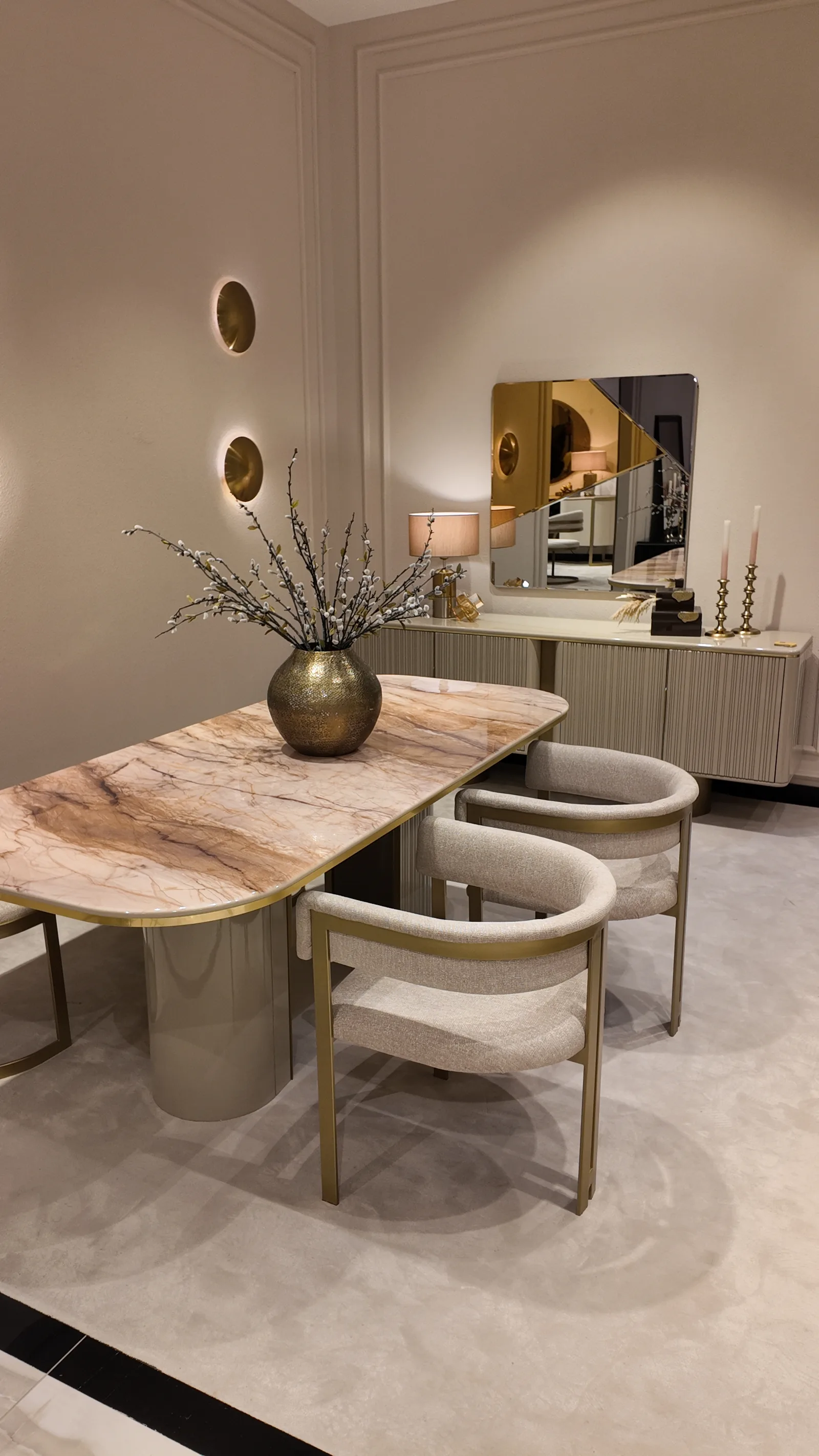
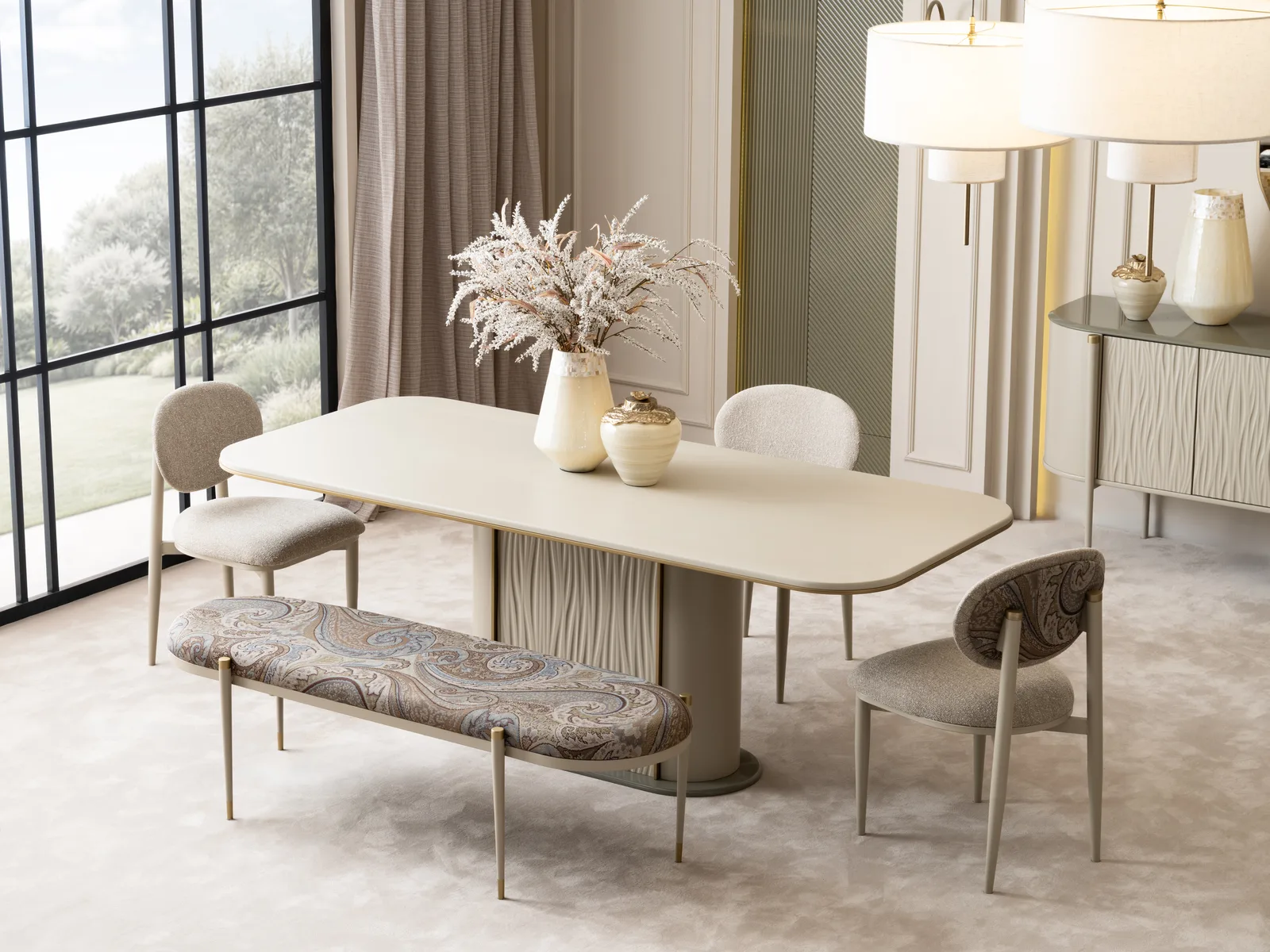
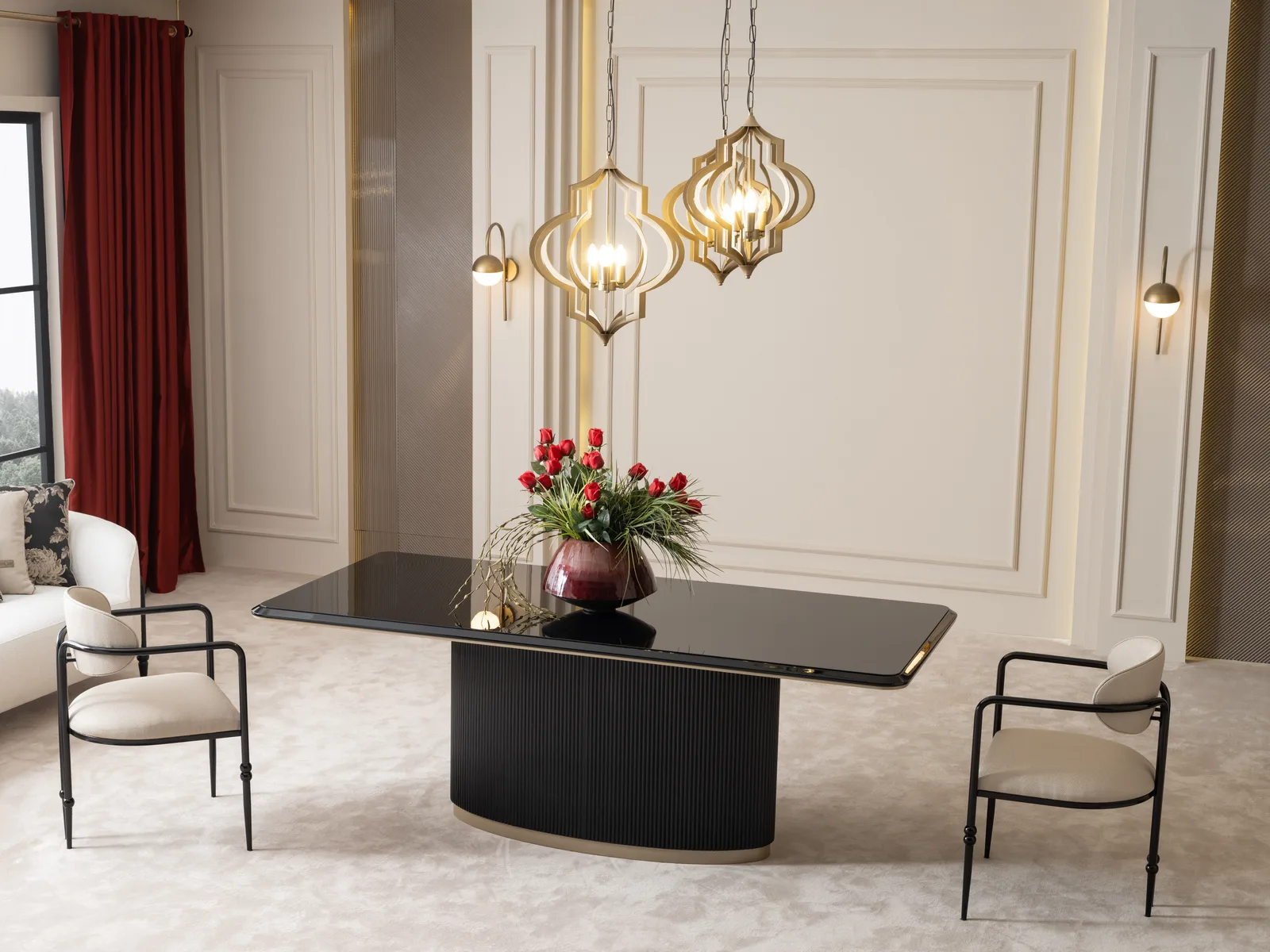
Table Top Materials: The Difference Between MDF, Ceramic, Porcelain and Marble
Short answer: four materials carry four different promises. MDF and HDF are the lightest and best-value, but sensitive to water — water seeping in from the edge swells the board permanently. Ceramic and porcelain are the most resistant to heat and scratching and do not stain; porcelain is a class above ceramic because it is pressed at higher pressure. Natural marble is the most striking but the most demanding: it is porous, and acids such as lemon and vinegar leave permanent dull marks on the surface. The decision rule is simple — if you use the table three meals a day, go for ceramic or porcelain; if you use it a few times a week, MDF is more than enough.
When looking at dining tables your eye is caught first by the shape and the colour. Yet what largely decides how many years the table will stay looking right is what the top is made of. Of two tables that look the same, one is covered in tea stains after five years while the other looks as it did on day one. In this article we put the four main top materials you will meet in a showroom — MDF, ceramic, porcelain and natural marble — side by side and explain the differences.
MDF and HDF tops: the most common option
MDF (medium-density fibreboard) and HDF (high-density fibreboard) are made by pressing wood fibres with resin. Melamine, laminate or natural wood veneer is applied on top. The great majority of dining tables on the market are in this group.
Pluses: light, easy to carry and install. The best-value option. The range of patterns is almost unlimited — marble, travertine, wood or plain colour, all are available. It does not shatter or crack on impact the way ceramic does.
Minuses: sensitive to water and damp. Water seeping in at the edges swells the board and there is no going back. Putting a hot pan directly on it can leave a mark. A knife tip or a hard object can scratch the surface.
Who it suits: a perfectly sensible choice for families who do not want to stretch the budget and who use the table with normal care. HDF is denser and more durable than MDF; if you have the choice between the two, go for HDF.
Ceramic tops: the strongest against heat and scratches

A ceramic top is made by firing a mixture of clay and minerals at very high temperature. Usually a thin ceramic sheet is bonded to a supporting panel beneath it.
Pluses: heat resistant — putting a pan straight from the oven on it does not harm the surface. It hardly scratches even if you try to cut on it with a knife. Because it is non-porous it does not absorb stains from wine, coffee or olive oil; they wipe off. Its colour does not fade in sunlight.
Minuses: heavy. A hard knock — a heavy pan dropped on a corner, for instance — can crack it or chip the edge. Repair is not as easy as with MDF. It costs more than MDF.
Who it suits: the most practical solution for homes that use the table heavily, have children and host guests often. If you live with the kitchen at the centre of things, a ceramic top pays for itself in the long run.
Porcelain (sintered stone) tops: a class above ceramic
A porcelain top is made on the same principle as ceramic, but the raw material is ground finer and pressed at higher pressure. The result is a denser, less porous and harder surface. In the trade it also goes by the name "sintered stone".
Pluses: it has all the advantages of ceramic and adds higher bending strength on top. Its water absorption is under one part in a thousand, so the chance of staining is practically nil. Because it can be made thin, it gives the table an elegant look.
Minuses: one of the most expensive options. Like ceramic it is heavy and brittle against hard knocks.
Who it suits: those looking for long life and no maintenance, with a slightly wider budget. Also the right choice for anyone who uses the dining table as a work or preparation surface too.
Natural marble tops: the most striking, the most demanding

Natural marble is real stone, quarried and cut. The pattern of every slab is unique — which is both its greatest attraction and a kind of responsibility.
Pluses: no other material has its visual impact. The veining is natural and never repeats. Looked after properly it lasts a lifetime, gaining patina over the years.
Minuses: it is porous. Acidic liquids such as lemon juice, vinegar and wine leave a dull mark on the surface — this is called "acid etching", it does not wipe off and needs repolishing. Coffee and oil stains can be absorbed. It needs periodic sealing (impregnation). It is the heaviest and generally the most expensive option.
Who it suits: those who put the table's appearance above everything else and are willing to take on a care routine. In homes with small children and a table that is always in use it can be demanding.
A quick comparison
Heat resistance: porcelain and ceramic are the best. Marble is average — a sudden change in temperature can crack it. MDF is the weakest.
Scratch resistance: porcelain and ceramic are very strong. Marble is medium — a kitchen knife can leave a mark. MDF depends on the surface finish, and is generally weak.
Stains: porcelain and ceramic do not absorb them. Marble does, and takes permanent marks from acid. MDF is fine if its finish is intact, weak once the edges have opened up.
Weight: MDF is the lightest, marble the heaviest. If you move things around often, that is a serious difference.
Price: MDF is the most affordable, then ceramic, then porcelain and marble.
So which should you buy?
There is no single right answer, but these three questions make it easier:
How hard do you work the table? If it is set three meals a day, the children do their homework on it and pastry gets rolled on it, choose ceramic or porcelain. If it is a dining room table used a few times a week, MDF is more than enough.
Do you have time for care? Natural marble needs regular attention. If your approach is "a quick wipe and done", stay away from marble.
Does the table extend? On extending tables the weight of the top bears directly on the mechanism. At very large sizes a ceramic or marble top can strain it; in that case always ask which material the maker recommends at that size.
You can see the top options for Selishome dining tables one by one on the product page, and zoom in to compare the textures. Wherever you are undecided, write to us and we will talk through which makes more sense for the way you live.
Frequently asked questions
What is the difference between a ceramic and a porcelain top?
Porcelain is made on the same principle as ceramic, but its raw material is ground finer and pressed at higher pressure. The result is a denser, less porous and harder surface; in the trade it also goes by the name "sintered stone". Porcelain has all the advantages of ceramic and adds higher bending strength. In return it is one of the most expensive options.
Should I buy an MDF table or a ceramic one?
The answer is decided by how hard you work the table. If it is set three meals a day, the children do homework on it and pastry gets rolled on it, choose ceramic or porcelain — in a life centred on the kitchen it pays for itself in the long run. If it is a dining room table used a few times a week, MDF is more than enough and will not stretch your budget.
What is the weakest point of an MDF top?
Water and damp. Water seeping in at the edges swells the board and there is no going back — that is the most common permanent damage on MDF. A hot pan placed directly on it can also leave a mark, and a knife tip or hard object can scratch the surface. On the other hand MDF is light, easy to carry, and does not shatter or crack on impact the way ceramic does.
Which is better, MDF or HDF?
HDF (high-density fibreboard) is denser and more durable than MDF. If you have the choice between the two on the same table, go for HDF.
Does a marble table stain, and how is it cared for?
Yes, marble is porous and that is its greatest weakness. Acidic liquids such as lemon juice, vinegar and wine leave a dull mark on the surface — called "acid etching"; it does not wipe off and needs repolishing. Coffee and oil stains can also be absorbed. Natural marble needs periodic sealing (impregnation). If your approach is "a quick wipe and done", stay away from marble.
Which top is the most heat resistant?
Porcelain and ceramic are the best; they take a pan straight from the oven. Marble is average — a sudden change in temperature can crack it. MDF is the weakest. The order is the same for scratch resistance: porcelain and ceramic very strong, marble medium (a kitchen knife can leave a mark), MDF dependent on the surface finish and generally weak.
Which top is the heaviest and which the lightest?
MDF is the lightest and marble the heaviest; ceramic and porcelain sit between the two but are noticeably heavier than MDF. If you move things around often, that makes a serious difference. Weight matters especially on extending tables, because the weight of the top bears directly on the mechanism — in detail in how to choose an extending dining table.
How are ceramic and porcelain tables cleaned?
A damp microfibre cloth is enough for daily cleaning; because they are non-porous they do not absorb stains. For detailed care, limescale marks and what to avoid, see caring for ceramic and porcelain tables.