How to Choose a Living Room Set: A Step-by-Step Decision Guide
Short answer: choosing a living room set is less a matter of taste than a matter of order. The right order: first decide the arrangement for your household (3+2+1, 3+3+1, corner, corner + armchair), then fit the dimensions to the room, then decide fabric and foam according to how heavily it will be used, and leave colour and complementary pieces until last. Most people work this list backwards; they choose the fabric first and leave the measurements to the end. That is what causes regret.
Step 1: How many seats? The arrangement for your household
The answer to "how many seats should my sofa set have?" is not the number of people living in the home but the size of the largest group that sits in the room at once. It is more efficient to cover the daily need with the set and busy days with a pouffe and a single armchair.
| Household | Suitable arrangement |
|---|---|
| Newly married couple, small room | Three-seater + armchair |
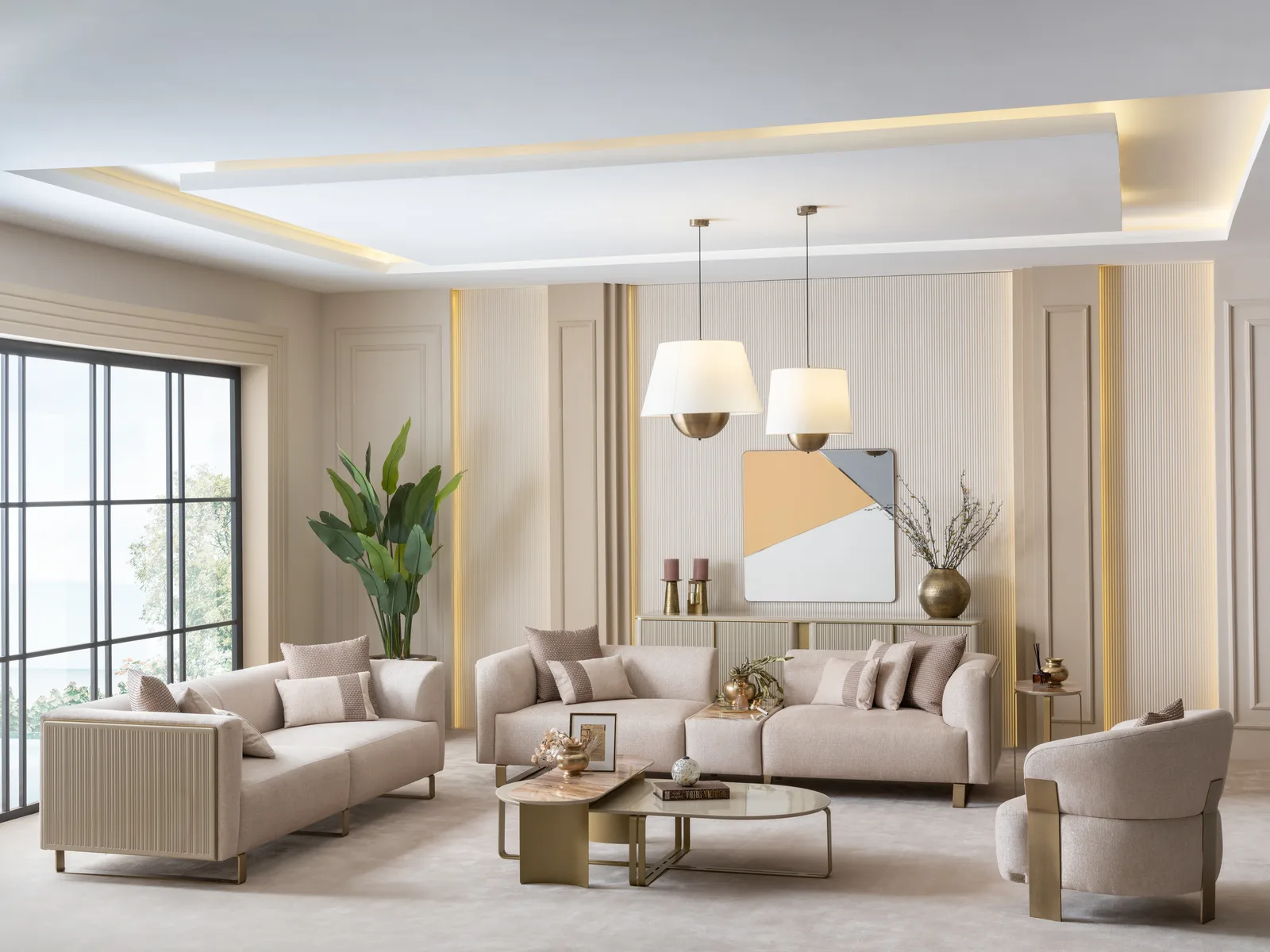
| Family with children | Corner set + armchair |
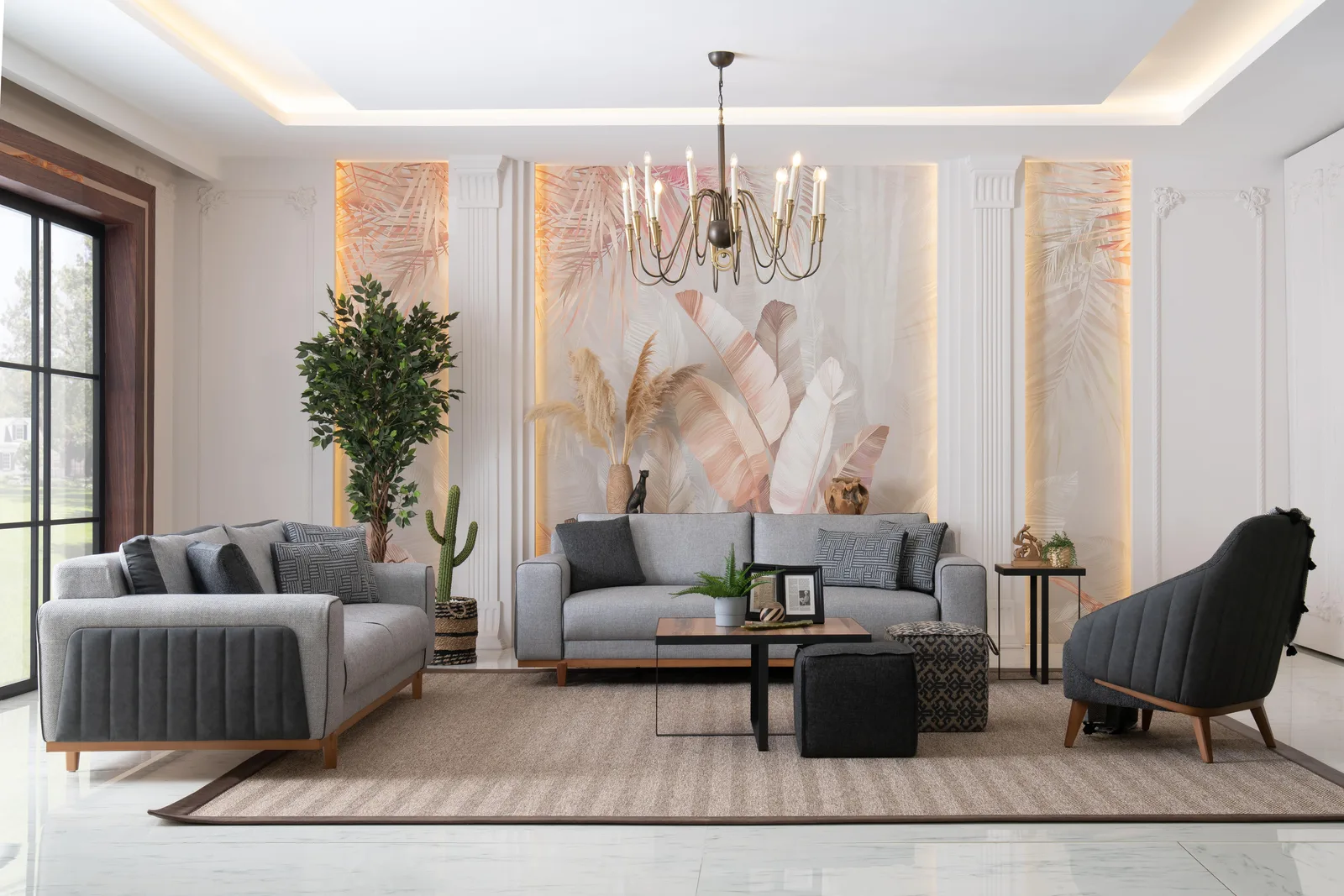
| Home that often has guests | 3+2+1 (facing layout) |
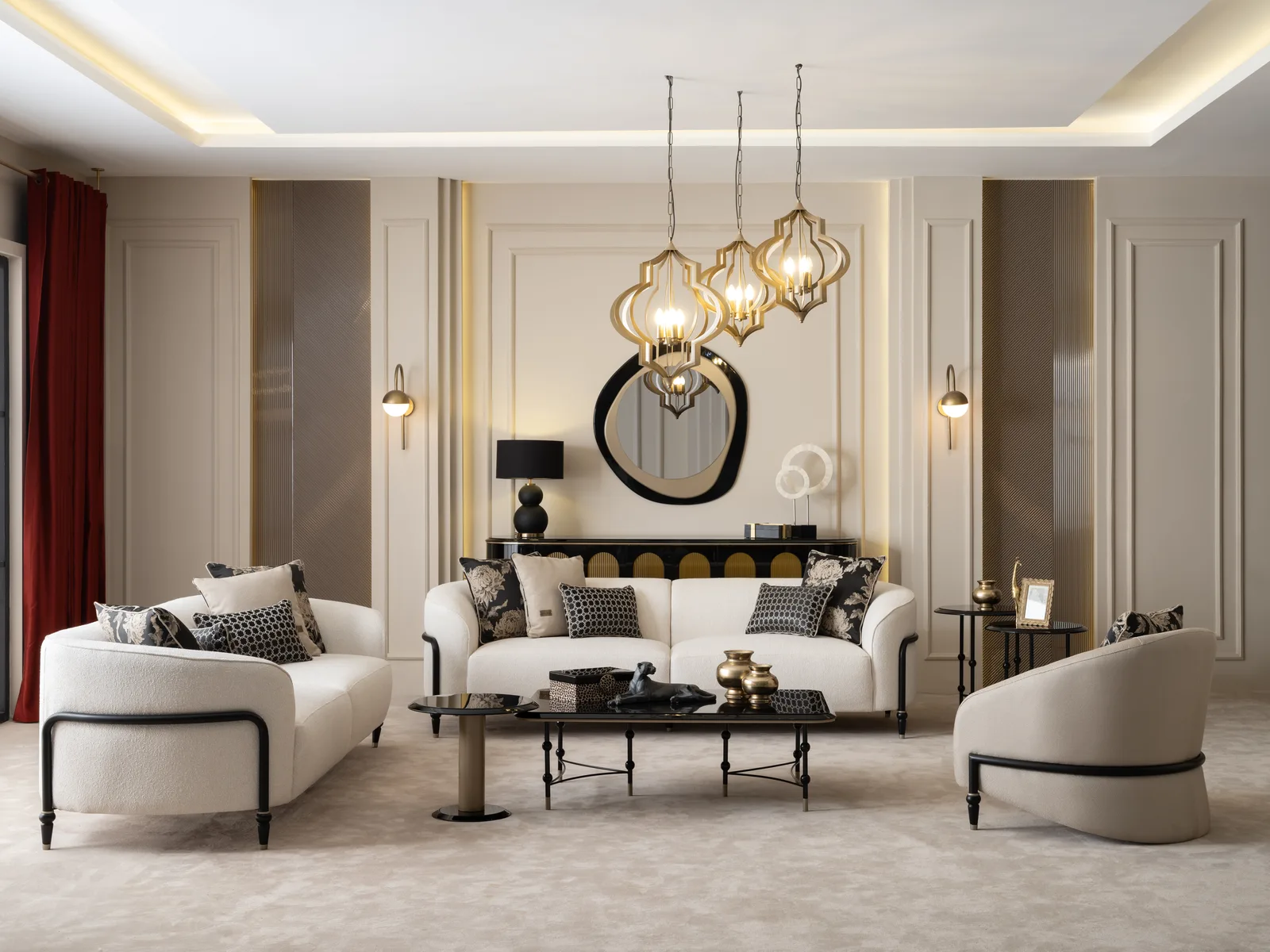
| Large family, spacious room | 3+3+1 or corner + two singles |
| Home where guests stay overnight | A set including a sofa bed |
↔ Scroll the table sideways to see all of it.
Whether you really need a lounging module is covered in our article on what a chaise longue is.
Step 2: Corner set or a classic sofa set?

In short: if everyone faces the television and one corner of the room is going to waste, a corner set; if face-to-face conversation and being able to change the layout from time to time matter more, a classic set comes to the fore. The comparison and a decision test are in our article corner sofa or sofa set. A third route is buying the pieces over time; the risks are in buying piece by piece or as a set.
Step 3: Measurements and layout — before you go to the showroom
Sketch the room; write down the clear length of the wall the sofa will lean against, the distance to the opposite wall, and the door and lift measurements. Piece dimensions and which arrangement suits which room are in sofa set dimensions; gaps and walkways are in the living room layout plan guide. If the room is under 20 m², start with how to furnish a small living room.
Step 4: A room you sit in every day, or a formal one?
This is the real question that decides where your budget goes. If, of two identical-looking sets, one will be used six hours a day and the other one hour a week, they are two different products.
| Usage profile | What to prioritise |
|---|---|
| The only room, used long hours daily | Foam density, hard-wearing fabric, removable cushion covers |
| A few hours in the evening | Balanced fabric, comfortable seat depth |
| Formal room only | Form, colour, the look of the weave |
| Room also used for play or work | Wipeability, sturdy arms |
↔ Scroll the table sideways to see all of it.
The test is simple: honestly work out how many hours a day in total are spent on the sofa. Over four hours and seat quality comes before looks; under one hour and it makes sense to put the budget into form and colour. If there are children or pets at home the profile counts directly as "heavy".
Step 5: The fabric decision — let the usage decide
Fabric is a continuation of step four. If you have a cat, avoid looped weaves; a dog, avoid plain dark surfaces that show hair; a small child, avoid fabrics that cannot be wiped. Colour is a durability decision too: light tones show stains, dark tones show dust, and mid-tone melanges sit between the two. For rub counts and cleaning codes, see how to choose sofa fabric.
Step 6: Frame, foam and mechanism
Fabric and foam can be renewed years later; the frame cannot. Do not decide without asking about the layer you cannot see in a photograph: the type of frame timber, the support system, and the density of the seat foam. The checklist is in how to tell a quality sofa.
The mechanism is a separate subject. If you are considering a model that converts to a bed or has an extending footrest, ask before ordering: will it be used daily, how much space is needed in front when open, and how long is the guarantee?
Step 7: Pulling it together with colour, coffee table, TV unit and rug

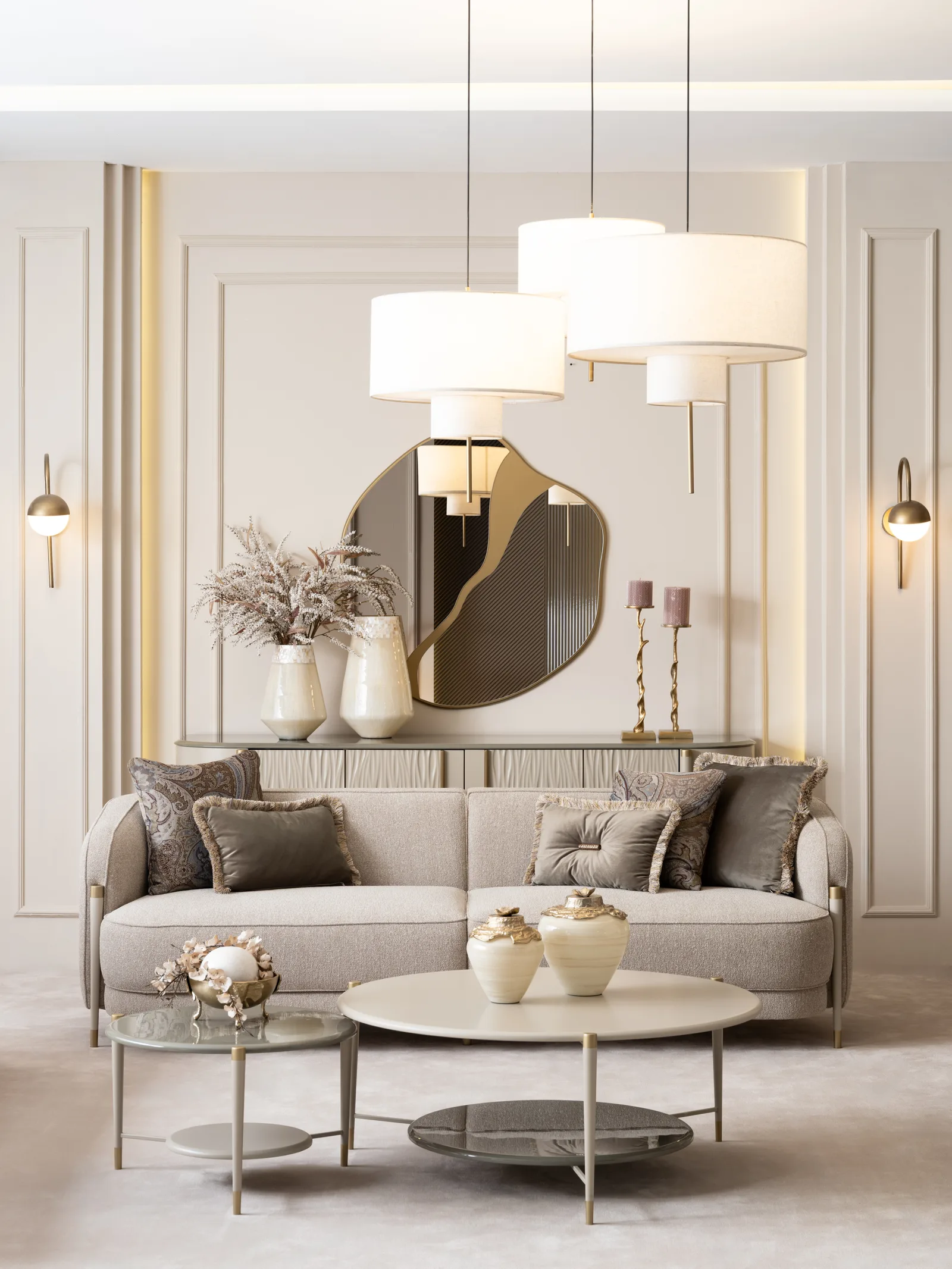
Choosing the set on its own is a common mistake. The sofa is not the room's only piece, it is its largest; the coffee table, unit and rug are part of the same equation. The coffee table top should not stand higher than the top of the seat cushions, and the rug should take the sofa's feet inside it. For colour, see furniture colour matching; for complementary pieces, the living room category.
Step 8: Ten minutes in the showroom — does it fit your body?
There is a job separate from checking quality: checking fit. A quality sofa may not suit you. Do not perch briefly; stay five minutes:
- Seat depth: with your back fully against the backrest, there should be a hand's width between the back of your knee and the front edge of the cushion.
- Feet: with your back against the backrest, your feet should rest flat on the floor; if they do not, the seat is not for you.
- Lumbar support: is the hollow of your back supported? That is where the ache comes from on long sits.
- Standing-up test: get up without leaning on the arm; an over-soft seat swallows you.
- Sitting side by side: sit two people; if shoulders touch, a three-seater is really a two-seater.
Eight questions before deciding
- How many people at most sit in the room at once?
- How many hours a day will it be used?
- Are there children or pets at home?
- Is everyone facing the television?
- What is the clear length in centimetres of the wall the sofa will go against?
- Will the pieces fit through the door and the lift?
- Does it go with your existing coffee table, unit and rug?
- Is there any chance you will move in the next three years?
With those answers, comparing models is easy. Classic arrangements are in the sofa set category and L-shaped ones in the corner sofa category; for an example parts list see the Prada sofa set page, and you can send your room sketch to the Selishome advisers. For made-to-order sets, delivery takes longer than for stock items; we explained what sets the schedule in why furniture delivery takes longer.
Frequently asked questions
What do you decide first when choosing a living room set?
The arrangement: how many seats you need and whether it will be a corner or a classic set. Fabric, colour and model come afterwards.
How many seats should my sofa set have?
Look not at the number of people living in the home but at the busiest moment in the room.
Which is more practical, 3+2+1 or 3+3+1?
3+2+1 takes up less space and suits face-to-face conversation. 3+3+1 increases the number of seats but needs two long walls; in medium rooms it makes moving around harder.
Can the same set serve both a formal room and one used every day?
In looks yes, in durability no. In a room used every day, foam density and the fabric's wear resistance take priority.